
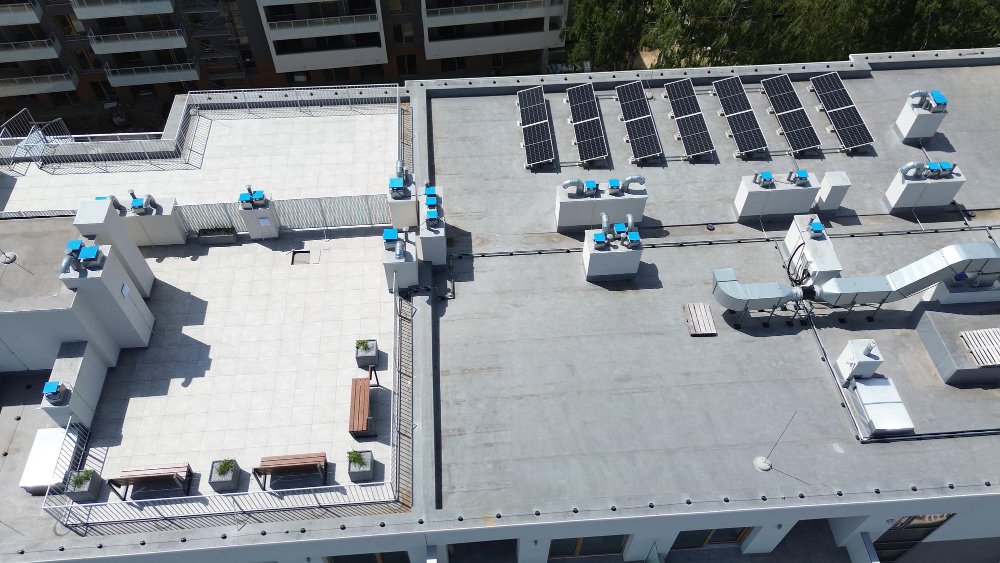
Q: What are commercial flat roof systems?
Answer:
Commercial flat roof systems are low-slope roofing assemblies designed to provide reliable waterproof protection for commercial buildings. Although commonly referred to as “flat,” these roofs include a slight slope that directs water toward drains or scuppers.
A complete commercial flat roof system includes much more than the visible membrane. It typically consists of insulation, vapor barriers where appropriate, flashing, roof penetrations, drainage components, and waterproofing details that work together to protect the building.
Common commercial flat roofing systems include:
- TPO roofing
- PVC roofing
- EPDM roofing
- Modified bitumen
- Built-up roofing (BUR)
Quick Summary
A commercial flat roof is a complete roofing system—not simply a membrane installed over the building.
Q: Which flat roofing system is best for my building?
Answer:
The best roofing system depends on several factors, including your building’s use, climate, rooftop equipment, maintenance expectations, energy goals, and budget.
For example, buildings with rooftop restaurants or manufacturing operations may prioritize chemical resistance, while office buildings often focus on energy efficiency and long-term durability. Professional roof evaluations consider the complete building before recommending a roofing system.
Q: How long do commercial flat roofs typically last?
Answer:
The lifespan of a commercial flat roof varies depending on the roofing material, installation quality, environmental exposure, and maintenance practices. Rather than focusing on a specific number of years, property owners should prioritize routine inspections and preventive maintenance that maximize the roof’s service life.
Regular inspections often identify developing issues before they become major repairs, allowing the roofing system to continue performing efficiently for much longer.
Quick Summary
Consistent maintenance often has a greater impact on roof longevity than the roofing material alone.
Q: Why is waterproofing so important?
Answer:
Waterproofing is one of the primary functions of every commercial roofing system. Without effective waterproofing, moisture can penetrate beneath roofing materials, affecting insulation, structural components, equipment, and interior finishes.
Proper flashing, membrane installation, drainage, and routine maintenance all contribute to long-term waterproof performance.
Q: How often should a commercial flat roof be inspected?
Answer:
Most commercial roofing professionals recommend scheduling comprehensive roof inspections at least twice each year—typically once in the spring and once in the fall. Additional inspections are also advisable after severe weather events such as heavy rain, strong winds, or hail.
Routine inspections help identify developing issues such as membrane wear, flashing deterioration, blocked drains, or minor punctures before they become larger and more expensive problems. They also create a documented maintenance history that supports better long-term planning.
Quick Summary
Preventive inspections reduce uncertainty. Identifying small concerns early is usually far less disruptive and more cost-effective than responding to emergency roof failures.
Q: Can most flat roofs be repaired instead of replaced?
Answer:
In many situations, yes. When damage is limited to specific areas and the overall roofing system remains structurally sound, professional repairs can restore performance and significantly extend the roof’s service life.
Replacement generally becomes the better solution when the roof has widespread deterioration, recurring leaks across multiple areas, saturated insulation, or other conditions that prevent reliable long-term performance. A comprehensive inspection provides the information needed to determine which option offers the greatest value.
Q: What should I look for in a commercial roofing contractor?
Answer:
Choose a contractor who evaluates the entire roofing system rather than focusing only on visible symptoms. Professional recommendations should be based on drainage performance, flashing condition, membrane integrity, insulation, roof penetrations, and the building’s long-term maintenance objectives.
If waterproof performance is a priority, working with specialists experienced in Flat Roof Waterproofing helps ensure that repairs and maintenance address the complete roofing assembly rather than isolated issues. A contractor who emphasizes preventive care, clear communication, and long-term asset protection is far more likely to deliver lasting results.
Quick Summary
The right roofing contractor doesn’t simply repair roofs—they help property owners develop a long-term strategy for preserving building performance and minimizing future repair costs.
Protect Your Commercial Property with Confidence
Answer:
Commercial flat roof systems are designed to deliver dependable protection for years, but their long-term success depends on informed decisions, professional installation, routine inspections, and proactive maintenance. Understanding how these systems work allows property owners to plan confidently, reduce unnecessary expenses, and respond appropriately when roofing issues arise.
Whether you’re selecting a roofing system for a new commercial building or evaluating the condition of an existing roof, partnering with experienced commercial roofing professionals provides the expertise needed to protect your property, your operations, and your investment for the future.